
- Log of the Moira
- Finding the Thread
- Cruising Asia
- Cruising the Solomon Islands
- Cruising Australia Part 1
- Cruising Papua New Guinea
- Pearls, Pearls, Pearls
- What Am I Doing Here?
- Black, White and Grey in Paradise
- Dubious Mission to Tagula
- Words Appart
- Rascals in Paradise
- Pearl Diving in Doga Sui Sui Pass
- American Spies
- The Giant Man Eating Octopus
- The Great Ebony Caper
- The Uplift Factor
- Planned Failure
- A Tangled Web
- Opposition
- Midnight Sun
- Lapi in the Isles of Love
- Unchartered Waters
- Unnamed Island
- The Isles of Love
- Earthlings
- Nothing Atoll
- Super-Organisms in Time Lapse
- People of the Sea
- Coral Fires Burning
- Symbiotic Coral Megabeasts
- Symbiosis
- A Handy Experiment
- Destiny in Action
- Keops and Kaleidoscopes
- Poisoned and Dying in Sidea
- Dire Straits
- PNG Update
- Cruising Australia Part 2
- Ancient Respected Oracle
- Eye of the Dolphin
- Sydney Dolphin Cult
- Water Wings
- Sydney Dolphin Connection
- Sydney's Dolphinarium
- Dolphin communication
- Starlight Starbright
- Captive Dolphins
- Politics of dolphin liberation
- Sun Heralds Sydney Dolphins
- 40 foot swimming pool
- Media Dolphin Campaign
- Government Goo
- Dolphins in captivity
- Dolphin Referendum
- Australian Media Campaign
- Dolphins to die
- Orcas Visit Moira
- Dolphin Update
- Man and Dolphin
- Cruising New Caledonia
- Cruising Fiji
- Cruising Samoa
- This Magic Sea
- We are
- Awareness
- Learning
- We Voyage This Magic Sea
- Bound for Knowledge
- Beyond Perceptual Horizons
- Facts of Life
- Intercommunications
- Sea's Communication Webs
- Appearing
- 4 Phase Process of Becoming
- Thread of Awareness
- Error of Expectations
- Change of Expectations
- Mind
- Learning
- Fields of Perception
- Guides
- Tides
- Thread of Awareness
- Contact The Moira
E-BOOK VERSIONS
Enjoy these adventures on your ebook reader and help support the Thread of Awareness network of websites by downloading the Log of The Moira ebooks in epub and mobi formats for €5 per ebook or €10 for all three ebooks.


The Complete Series of all three ebooks.
For your mermaid.
Cellular Communications
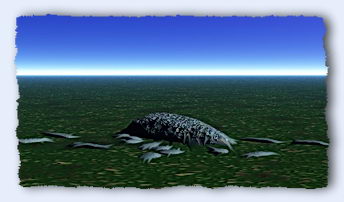
Slime moulds organize some astonishing get togethers with a communication system derived from their bacteria ancestors.
Because cells are much larger than bacteria, biologists have investigated slime mould communications since 1933.
Discoveries about slime moulds communications have provided important clues on the mystery of how more complex creatures coordinate their development from an egg to a multicellular organism.
Coming Together
Slime moulds live as solitary amoebae, wandering around the forest floor or pseudopoding through rotting wood - until their food or water begins to dwindle.
When slime mould cells begin to starve or dehydrate, they release a pheromone-like chemical called cyclic AMP. This messenger molecule alerts all the related slime mould amoebae in the vicinity that their luck is about to change.
Other slime mould amoebae detect the AMP and follow the scent to join forces with the troubled amoebae. In addition to stimulating a follow the leader attitude, AMP also excites those that detect it into making and releasing their own AMP. So, as the amoebae stream together, they generate more signals drawing an ever growing crowd. AMP is an important chemical word in the language of cells and seems to be understood and made by all cells, even our own.
When the amoebae converge, they mound together. When the mound reaches a critical size, it plops over on its side and becomes a small slug-like creature made of about 100,000 cells.
Getting under way
The slug looks and acts like a multicellular organism. It creeps through the forest soil for three to four days, leaving a slimy trail behind it. The slime trail not only gives slime moulds their popular name, it also lubricates the forward motion of the slug. When the slug finds a place with the correct environmental parameters, it undergoes a second remarkable transformation.
Moving through time
The cells forming the nose and primitive skin of the slug migrate into new positions and duties. Some become a basal disk and attach the whole group to the forest floor. Others organize themselves into a long hollow stalk that towers into the air as much as 5-millimeters above the forest floor. All in all, about 30 percent of the amoebae that formed the slug reorganize into a plant-like fruiting body.
The other 70 percent, those from the posterior inner portion of the slug, squeeze up the hollow stalk their friends make with their bodies and stuff themselves into the upper end of the tube, forming a bulb-shaped capsule. Each cell curls up to make as much room as possible in the bulb and secretes a thick wall of cellulose around itself. The resulting spoor can, it is said, withstand extreme environmental conditions for months, perhaps years. They can be frozen solid or baked dry and still survive.
Space Cadets
After the spores settle into place, some of the amoebae forming the capsule seal off the spores from the rest of the hollow stalk. Then, the amoebae making the stalk wall pump oxygen into the sealed hollow space. When the pressure exceeds a certain level the capsule ruptures and the spores are blasted into the air to be carried by the wind to new destinations.
There are lots of good examples of the amazing communication skills of cells, but the slime moulds hold a special fascination because of the remarkable transformation of free living creatures into a single, organized multicellular concept. And the final ejaculation at the end of the cycle reminds me, somehow, of our human effort to blast people, and ideas, off into space.
For more information about how cells communicate to form larger and larger creatures, explore the communication web of the living corals.
