
- Log of the Moira
- Finding the Thread
- Cruising Asia
- Cruising the Solomon Islands
- Cruising Australia Part 1
- Cruising Papua New Guinea
- Pearls, Pearls, Pearls
- What Am I Doing Here?
- Black, White and Grey in Paradise
- Dubious Mission to Tagula
- Words Appart
- Rascals in Paradise
- Pearl Diving in Doga Sui Sui Pass
- American Spies
- The Giant Man Eating Octopus
- The Great Ebony Caper
- The Uplift Factor
- Planned Failure
- A Tangled Web
- Opposition
- Midnight Sun
- Lapi in the Isles of Love
- Unchartered Waters
- Unnamed Island
- The Isles of Love
- Earthlings
- Nothing Atoll
- Super-Organisms in Time Lapse
- People of the Sea
- Coral Fires Burning
- Symbiotic Coral Megabeasts
- Symbiosis
- A Handy Experiment
- Destiny in Action
- Keops and Kaleidoscopes
- Poisoned and Dying in Sidea
- Dire Straits
- PNG Update
- Cruising Australia Part 2
- Ancient Respected Oracle
- Eye of the Dolphin
- Sydney Dolphin Cult
- Water Wings
- Sydney Dolphin Connection
- Sydney's Dolphinarium
- Dolphin communication
- Starlight Starbright
- Captive Dolphins
- Politics of dolphin liberation
- Sun Heralds Sydney Dolphins
- 40 foot swimming pool
- Media Dolphin Campaign
- Government Goo
- Dolphins in captivity
- Dolphin Referendum
- Australian Media Campaign
- Dolphins to die
- Orcas Visit Moira
- Dolphin Update
- Man and Dolphin
- Cruising New Caledonia
- Cruising Fiji
- Cruising Samoa
- This Magic Sea
- We are
- Awareness
- Learning
- We Voyage This Magic Sea
- Bound for Knowledge
- Beyond Perceptual Horizons
- Facts of Life
- Intercommunications
- Sea's Communication Webs
- Appearing
- 4 Phase Process of Becoming
- Thread of Awareness
- Error of Expectations
- Change of Expectations
- Mind
- Learning
- Fields of Perception
- Guides
- Tides
- Thread of Awareness
- Contact The Moira
E-BOOK VERSIONS
Enjoy these adventures on your ebook reader and help support the Thread of Awareness network of websites by downloading the Log of The Moira ebooks in epub and mobi formats for €5 per ebook or €10 for all three ebooks.


The Complete Series of all three ebooks.
For your mermaid.

Atomic Communications
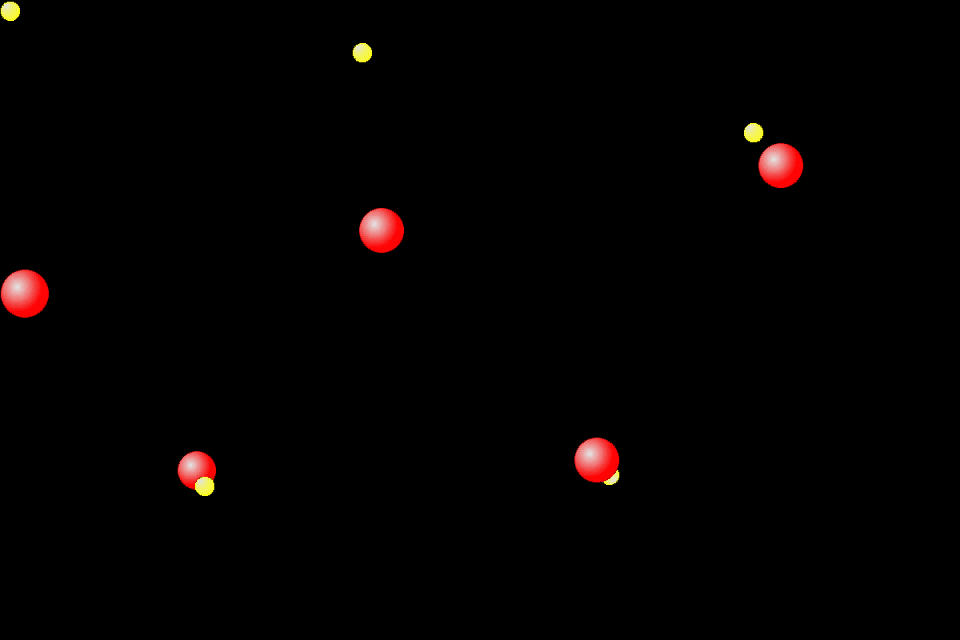 An electron and a proton intercommunicate to become an atom of hydrogen. Electrons belong to a class
of sub-atomic particles called leptons. Protons are up and down quarks
fused together by the strong force created by intercommunications
of gluons.
An electron and a proton intercommunicate to become an atom of hydrogen. Electrons belong to a class
of sub-atomic particles called leptons. Protons are up and down quarks
fused together by the strong force created by intercommunications
of gluons.
The hydrogen atom is not an electron and it is not a proton, it is the emergent intercommunication of these two sub-atomic particles when they lock together in a new relationship. The communication web of an electron and a proton has characteristics and behavior totally different from an electron or a proton. Hydrogen atoms are the most abundant element in the universe, comprising, for example, 92.1% of the sun.
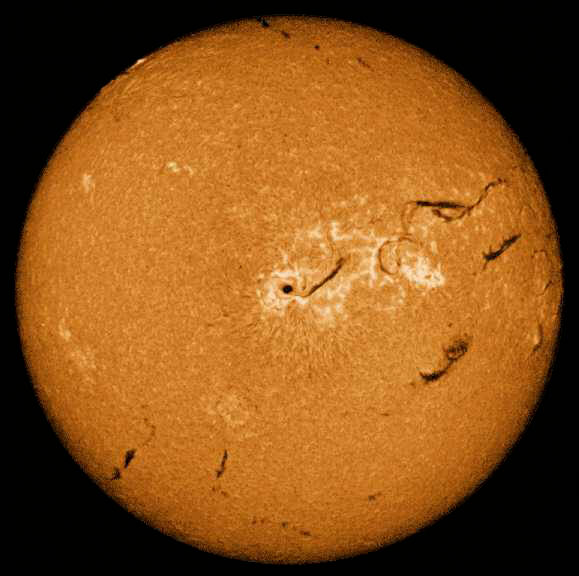
Hydrogen atoms intercommunicate in stars, forced together by gravity to form pressures 340 billion times as great as Earth's air pressure at sea level. Temperatures reach 15,000,000º Celsius. Hydrogen atoms in the sun are stripped of their electrons and four protons fuse together to form one helium nucleus. The helium nucleus is slightly less massive than the four protons and the excess mass is expelled as energy, carried to the surface of the sun by convection, and released as heat and light. 700 million tons of hydrogen are converted to helium every second. Helium makes up another 7.8% of the elements in the sun.
|
The remaining 92 stable natural elements making up the residual 0.1% of the sun, are more elaborate communications of electrons and protons forced into stable relationships in the high pressures and temperatures. After hydrogen and helium, the most common elements, throughout the universe, are (in order of abundance) oxygen, carbon, and nitrogen.
Elements pressed into stable relationships in previous stars and released into space by explosions marking the end of the star's life, congeal to form planets, including the Earth.
Following the formation of planets, solar radiation had something to communicate with. Solar radiation struck the elements in a pulsing wave, ranging in a smooth curve from full darkness to full radiation as the planet spun on its axis. This pulsing energy source created the conditions required to arrange the most common elements of hydrogen, oxygen, carbon and nitrogen into living molecules.
Atoms communicate to form molecules. We commonly make the mental mistake of considering water as two atoms of hydrogen and one atom of oxygen.
Hydrogen and Oxygen are both colorless, odorless gasses, each with its own peculiar characteristics. If you fill a container with hydrogen and oxygen gasses, you wind up with a container full of hydrogen and oxygen gasses.
If, however, you then add energy - such as a spark - the hydrogen and oxygen will emerge as a new relationship, and orbit each other in such a way as to create the molecule we think of as water.
Water is not the hydrogen and oxygen gasses, just as a waterspout is not air and water vapor.
Water is the emergent interaction of hydrogen and oxygen in a new and different relationship, one that can be disrupted by stopping the communication with electrical interference to reproduce hydrogen and oxygen gasses again. Water is a quantum jump (with no in-between steps) from hydrogen and oxygen.
 |
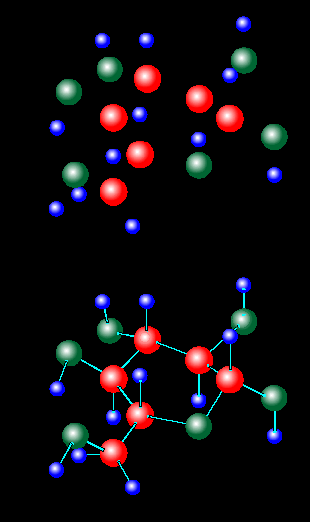 |
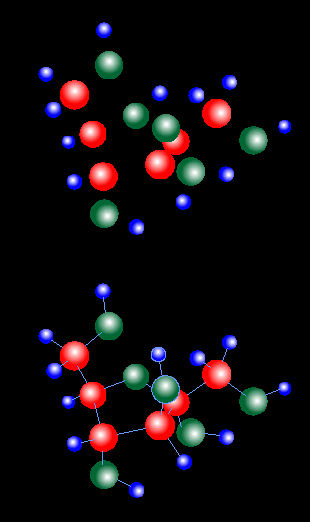
Fructose (left) and Glucose (right) are organic (living) molecules. Both are made of exactly the same elements, 6 carbon atoms, 12 hydrogen atoms, and 6 oxygen atoms, but they are not the same sugars, and have different properties. Each kind of sugar is a very specific exchange of information between the elements - a communication web where form and function is inherent in the kind and pattern of information exchange between the atoms of carbon, oxygen and hydrogen. Sugar is not carbon. Sugar is not oxygen. Nor is it hydrogen.
Organic molecules are primarily the intercommunications of the most common elements of the universe, hydrogen, carbon, nitrogen and oxygen. There are thousands of different organic chemicals, each forming an important link in the communication web of living organisms, all made from combinations of the same atoms in different associations. Their functions depend on a variety of characteristics such as their size, shape, stability, electronic state, rate and ease of oscillation or phase change, and even their magnetic polarity.
The elements move through the living creatures in a constant flood.
Living beings are not the elements - they are the relationships between these elements as they move through the webs of communications created by the thread of awareness in chaos.
Find out how bacteria communicate using organic molecules.
Discover how cells communicate.
